
Character Is Destiny, Part 1 of 6
The Power of Character-Driven Stories


“Character is destiny.”
—Heraclitus (c. 500 BC)
Our lives are shaped by the choices we make.
Our choices are shaped by who we are.
“Character is destiny” is more than a maxim—it’s a powerful tool for creating authentic and compelling stories.
In this six-part series, I’ll show you how this ancient wisdom can improve your writing…
Sense-making
Our lives are full of seemingly random events and external forces. These effects have causes, but what these causes might be is anyone’s guess.
All too often, life doesn’t make sense.
Stories, on the other hand, must make sense. Because that’s what stories are for: to help us make sense of the world—and of ourselves.
Sense-making is the process of giving meaning to experience.
The key to sense-making is storytelling.
The best stories, those that survive the test of time, are those stories that best make sense of our world and of ourselves.
Think of religion.
At the heart of every religion is a story.
These sacred stories are shaped by their respective cultures, and they differ from one religion to the next, but their purpose is the same: to give meaning to suffering.
Causality Creates Meaning
We make sense of our past by creating a story for ourselves using causal words like “because,” “so,” and “that’s why”:
“I got this job because I earned it.”
“It was raining cats and dogs, so of course I’m late.”
“I work too much. That’s why my wife divorced me.”
Likewise, we make sense of our future by creating stories of cause and effect:
“If I work hard, I’ll get promoted.”
“If I leave now, I’ll get there on time.”
“If I apologize, my friend will forgive me.”
In stories, causality creates meaning.
By showing how actions lead to outcomes, a story communicates a message about values, ethics, or the nature of the world.
Agency and Coincidence
Agency is the power to create change in the world or in ourselves.
When we identify ourselves as the cause of events, we give ourselves agency. When we blame external causes, we lose our agency.
Good stories give agency to a character. Bad stories give agency to the world.
To see how this works, let’s imagine a sailor.
Call him Odysseus.
Odysseus has just survived the most terrible war in human memory. His side was victorious, in large part due to his own ingenuity. But now Odysseus is troubled. He’s been at war for ten long years. He misses his wife and son.
He wants to go home.
If this is our story, we need some obstacles. Something to prevent, or at least delay, our hero from achieving his objective.
Enter a storm.
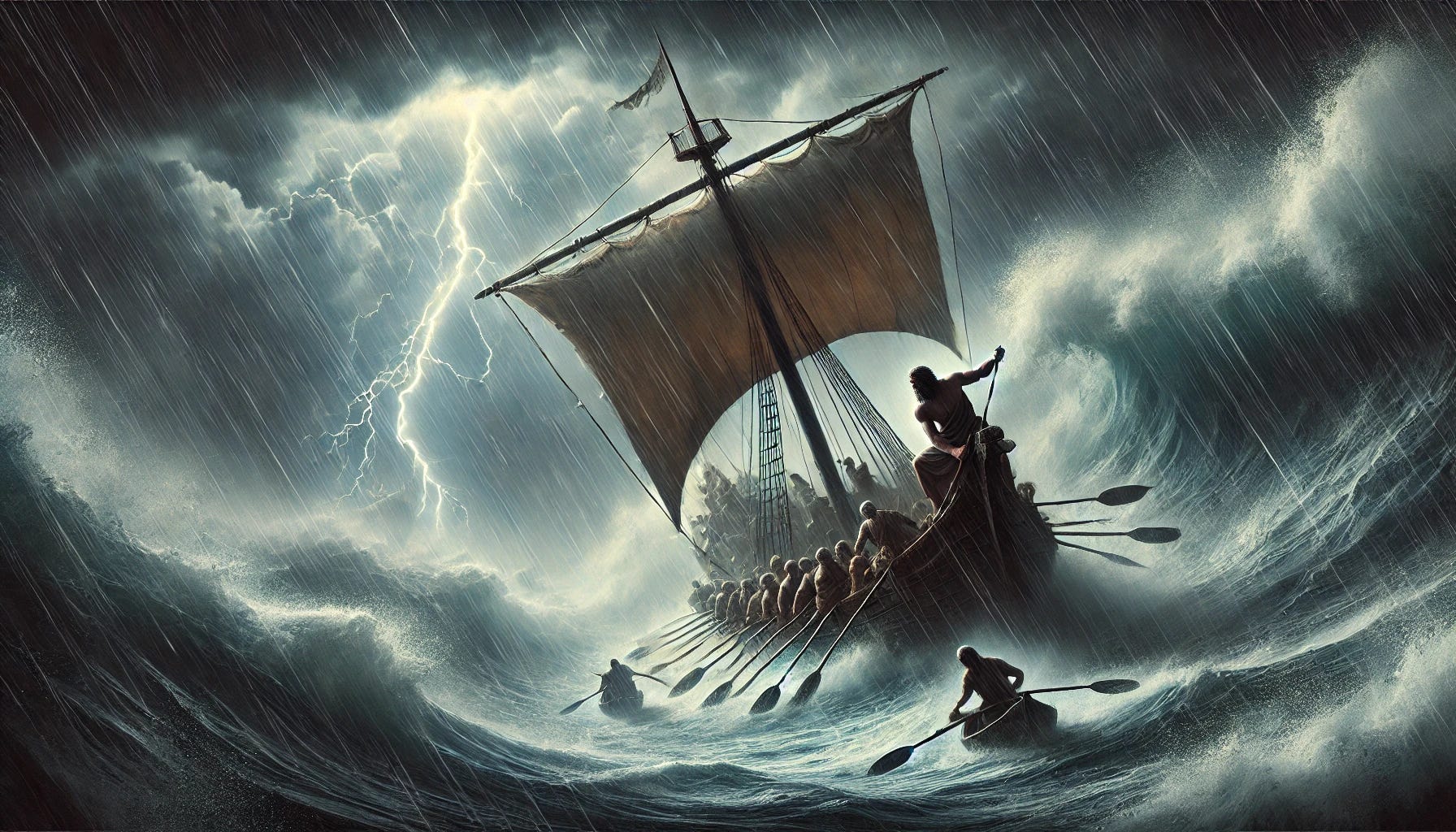
Now the hero has a problem.
And so do we.
If a plot obstacle is not the result of the hero’s actions, then it’s a coincidence, something that happens seemingly at random.
Not entirely random, of course. Even coincidence has a cause. When coincidence appears in a story, the cause is not the hero or the world.
It’s the author.
When readers notice a coincidence in the plot, they can feel the hand of the author at work. The plot’s mechanical gears begin to show. This can shake an audience out of their fictive dream.
Irritating, at best. Maddening, at worst.
Good writers use coincidence sparingly or not at all. Sometimes you can get away with it. There are two ways coincidence can work in a story:
At the very beginning, to kick-start the narrative.
As an obstacle, to cause problems for the hero.
But when a coincidence helps a character, it feels like a cheat. The author is making things happen for their own convenience. It’s lazy writing.
Let’s return to Odysseus in the storm.
The storm is an obstacle to Odysseus sailing home, so maybe that’s okay.
But it could be better.
How?
Let’s give agency to the hero.
We can improve our story by making Odysseus the cause of the storm.
Hmm…
What if we make Odysseus a god, capable of commanding the elements?
No, we can’t do that, because this is a sequel to The Iliad. Odysseus’ character is already well-established. He’s a mortal. Everyone knows that. Yes, he’s the cleverest of men, but if Odysseus had any supernatural powers, we’d know it by now. We can’t completely change his character for the sequel.
You could maybe write a story about Odysseus changing from a mortal into a god—that happens often enough in the ancient myths and legends—but this isn’t that story. This is the very human story of a man returning home from a war.
Okay, so let’s introduce another character who has the power to raise a storm. An elemental god.
Call him Poseidon.
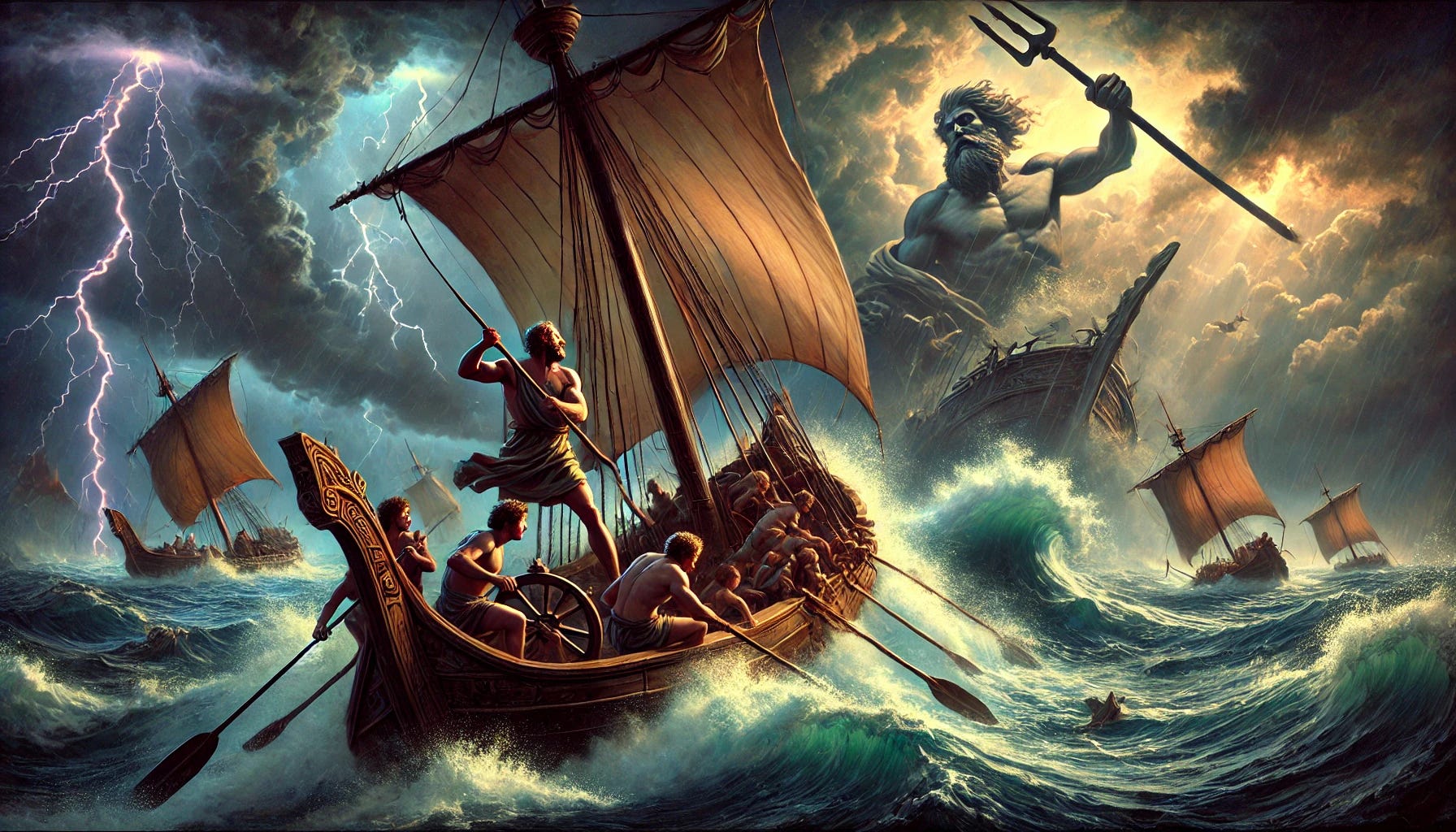
Poseidon causes the storm because…what?
Because he’s mad at Odysseus.
But why is Poseidon mad at Odysseus?
He’s mad at Odysseus because of…something Odysseus has done?
Yes!
This is the key: the storm is Odysseus’ own damn fault because he did something that angered a god.
Whatever it was that Odysseus did, it came out of his character.
Great. Now we’ve tied Odysseus’ character to his destiny.
The rest is in the details.
There are lots of ways we could make this work in a story, but here’s what Homer, the author of The Odyssey, came up with:
Sailing home from the Trojan war, Odysseus saved his men by blinding a Cyclops, Polyphemus. Polyphemus was the son of Poseidon.
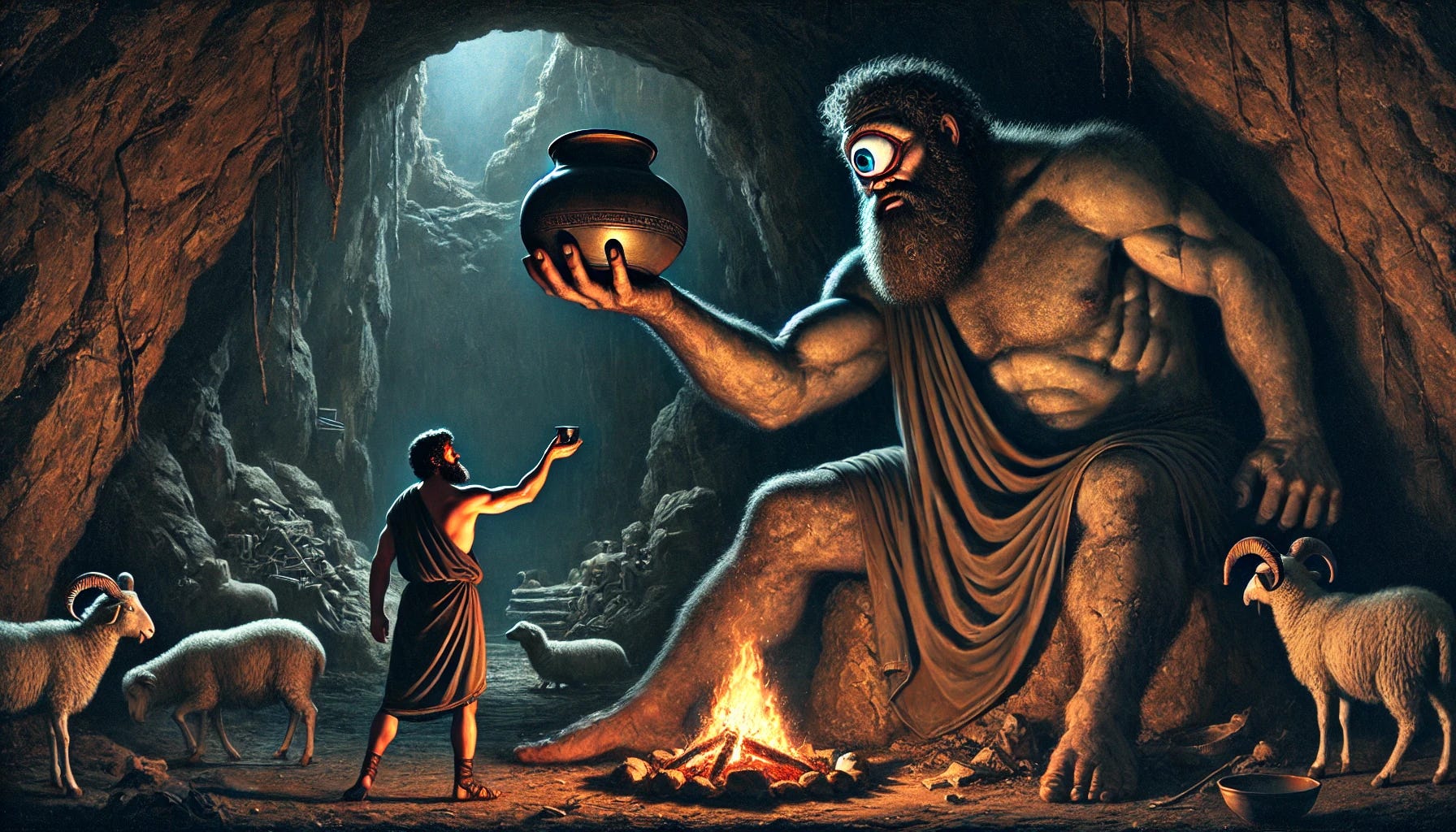
Odysseus tricked Polyphemus by telling him is name was “Nobody.” Later, when the other Cyclopes asked what happened, Polyphemus said he was attacked by Nobody. This allowed Odysseus to escape unharmed.
But something central to Odysseus’ character would not allow him to remain anonymous in victory.
You see, Odysseus is a hero in a world where fame is immortality. The Greeks had a word for it: kleos. It means “undying glory,” immortality through the stories people tell about you. This is what drove the ancient heroes to commit acts of heroism.
Because Odysseus wants his deeds to be remembered, he taunts the Cyclops as he’s sailing away. He reveals his true name: “Odysseus of Ithaca.”
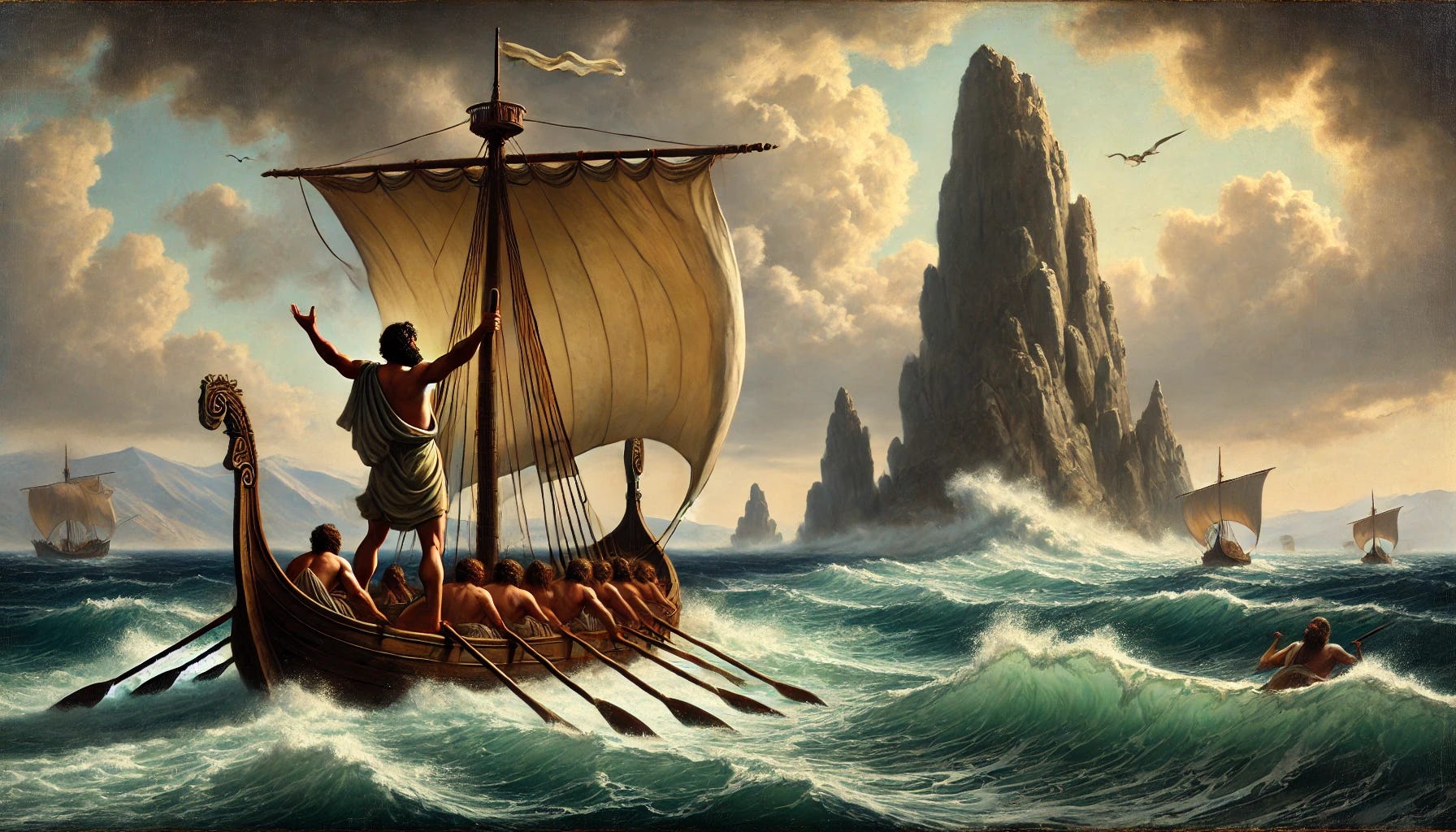
When Poseidon hears the name of the man who blinded his son, he rages at Odysseus and creates the storm.
But who really caused the storm?
Odysseus.
Because character is destiny.
True to Character
In a good story, the character’s desires and fears drive their actions.
These actions create the plot.
This is the essence of character-driven storytelling. When story comes from character, every twist and turn feels both surprising and inevitable.
Take a moment to think about your favorite stories.
What makes them memorable?
When a plot resonates, it’s usually because the story stems from the characters’ choices. Personal decisions, shaped by inner struggles, create the narrative.
For example:
A hero runs into danger when others would flee. Why? Because their greatest fear isn’t death but failure to protect someone they love.
A villain lashes out instead of making peace. Why? Because their lust for power masks a fear of rejection.
When decisions feel true to character, readers connect with the people in your story.
Plotting from character ensures that every action resonates emotionally, drawing readers deeper into the narrative.
Readers Want to Know Why
Readers don’t just want to know what happens next—they want to know why it happens. When readers understand the motivations behind a character’s actions, and how those actions create the obstacles, they become emotionally invested in the outcome.
For example:
When a hero sacrifices their dream to save someone they love, readers feel the weight of that decision because they understand the character’s values and fears.
When a flawed character makes a selfish choice, readers may cringe, but they’ll empathize if the decision reflects a believable internal struggle.
In both cases, the plot isn’t just a sequence of events—it’s a reflection of the character’s inner journey.
The stakes feel personal.
The conflicts seem meaningful.
And the story becomes unforgettable.
Plotting From Character
When your plot grows out of your character’s choices, several powerful things happen:
Authenticity: The story feels real because the events are driven by the character’s personality and motivations, not imposed from the outside.
Emotional Depth: Readers care more when they can see the emotional stakes behind each decision.
Natural Flow: The plot unfolds organically, creating a sense of inevitability that makes even surprising twists feel earned.
Character Secrets Drive the Plot
Every character has a secret fear. These fears are hidden in the nine character types of the Enneagram. Let’s see how we can use these fears to shape our stories:
1. The Reformer
Fear: Being corrupt, bad, or defective.
Example: A judge, afraid of making a wrong decision, delays a critical ruling in a high-stakes case. His hesitation allows the guilty party to manipulate evidence, leading to chaos in the courtroom and in the judge’s personal life.
2. The Helper
Fear: Being unlovable or unwanted.
Example: A devoted nurse, desperate to feel needed, neglects her own health in order to care for others. When her condition worsens, she must decide whether to finally accept help or risk losing the ability to help others.
3. The Achiever
Fear: Being worthless or a failure.
Example: A corporate executive, afraid to look like a failure, fakes the success of a major deal. When the truth threatens to surface, she must choose between her well-crafted image and her integrity.
4. The Artist
Fear: Being insignificant or without identity.
Example: A musician, afraid of being ordinary, sabotages a recording session to make his own contribution stand out. This alienates the other band members and risks ruining their potential breakout album.
5. The Observer
Fear: Being incompetent.
Example: A reclusive inventor, afraid of seeming unprepared, withholds a groundbreaking discovery until it’s “perfect.” When others attempt to steal his work, the inventor is forced into the very chaos he’s tried to avoid.
6. The Questioner
Fear: Being unprotected or abandoned.
Example: A bodyguard, wary of betrayal, refuses to trust her own instincts and follows a flawed plan set by others. When disaster strikes, she must confront her fears and take the lead—or lose everything.
7. The Adventurer
Fear: Being trapped in pain or deprived.
Example: A travel blogger, afraid of missing out on her next big adventure, impulsively spends her life savings on a dangerous expedition. Her reckless decision leaves her stranded in a foreign land, forcing her to confront the very realities she’s been avoiding.
8. The Leader
Fear: Being controlled or weak.
Example: A vigilante leader, unwilling to appear vulnerable, refuses to compromise with an ally. His need for control fractures the group and leads to devastating consequences that he must take responsibility for—or risk losing everything.
9. The Diplomat
Fear: Being fragmented or in conflict.
Example: A community mediator, desperate to avoid conflict, agrees to unreasonable demands from a powerful group. This inflames tensions and forces her to choose between keeping the peace or standing up for what’s right.
Takeaway
Start with character.
Let their fears and desires drive your story.
A great plot doesn’t just happen to a character—it’s created by them.
Next
In the next post, we’ll explore how a character’s secret fear shapes their choices and drives the plot, using examples from some of the most memorable stories in literature, film, and television. Click here to discover how to use these secret fears to craft compelling characters who bring your stories to life.
Subscribe for the Full Series
If you’re ready to build better plots through character secrets, stay tuned for the next post in this series.
Subscribe now for actionable insights, tips, and tools to help you create characters who shape their own destiny—and stories we’ll remember.
Want even more?
How to Write Great Characters: The Key to Your Hero's Growth and Transformation is your quick-and-easy guide to mastering character creation.

Grab your copy today and start writing great characters.
📚 Get the Book and transform your writing journey.
Thank you for reading and supporting my work—it means the world to me!